FIBRE
Polyester smelled stronger
In a Ghent University study, polyester shirts worn for a spinning class smelled more intense and less pleasant than cotton ones after the same workout.
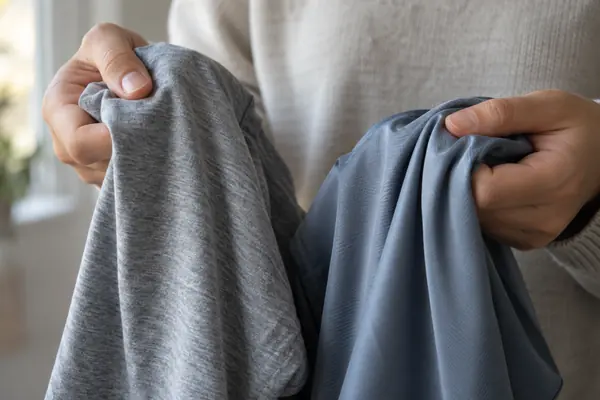
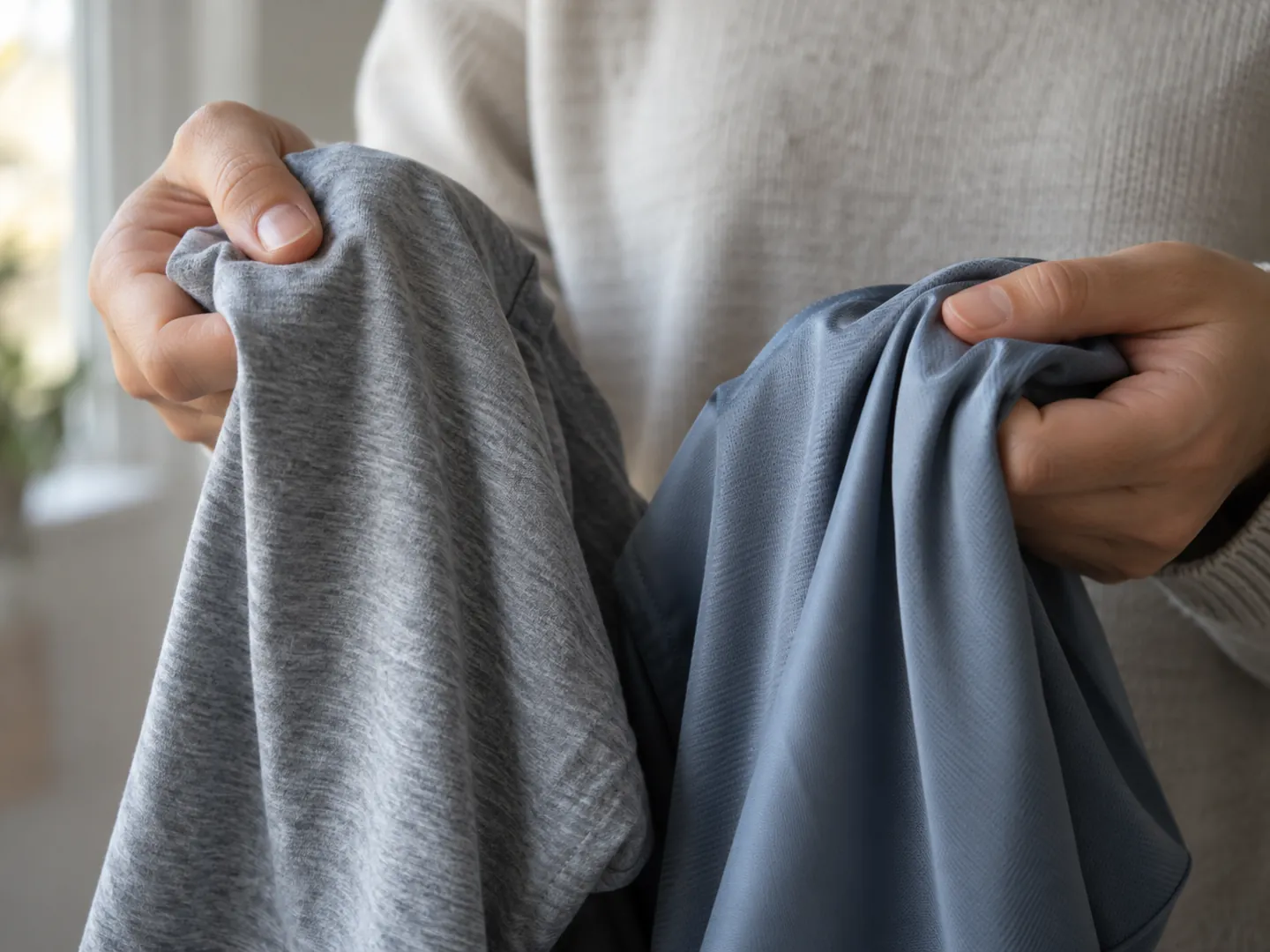
Check a fabric
WHAT THE RESEARCH SAYS
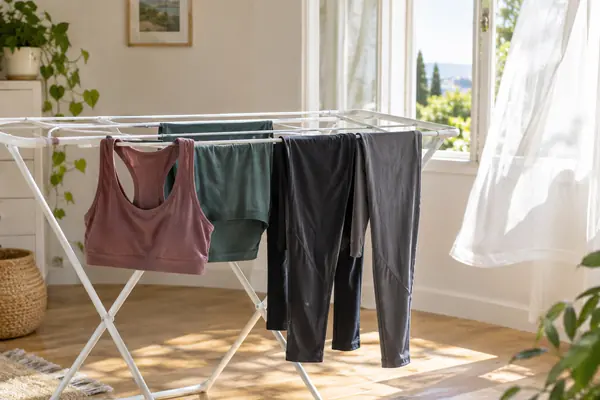
DRY IT fast and fully
AI-generated image, not a photograph of a real person or place.
Sweat and bacteria travel from skin to shirt.
What happens next depends on the fibre. Studies from Belgium, Canada, New Zealand and the UK show polyester and nylon hold on to odours differently from cotton and wool, and that how kit dries after washing counts too.
THE SHORT ANSWER
Three findings from the research.
Together they explain most stubborn smells.
FIBRE
In a Ghent University study, polyester shirts worn for a spinning class smelled more intense and less pleasant than cotton ones after the same workout.
Check a fabricBACTERIA
Micrococci were found in almost all the synthetic shirts and almost only on synthetic ones. Staphylococci were common on both cotton and polyester.
See the numbersDRYING
A 2025 study of synthetic T-shirts found humid drying conditions were linked to characteristic malodours and favoured the growth of particular bacteria.
What to do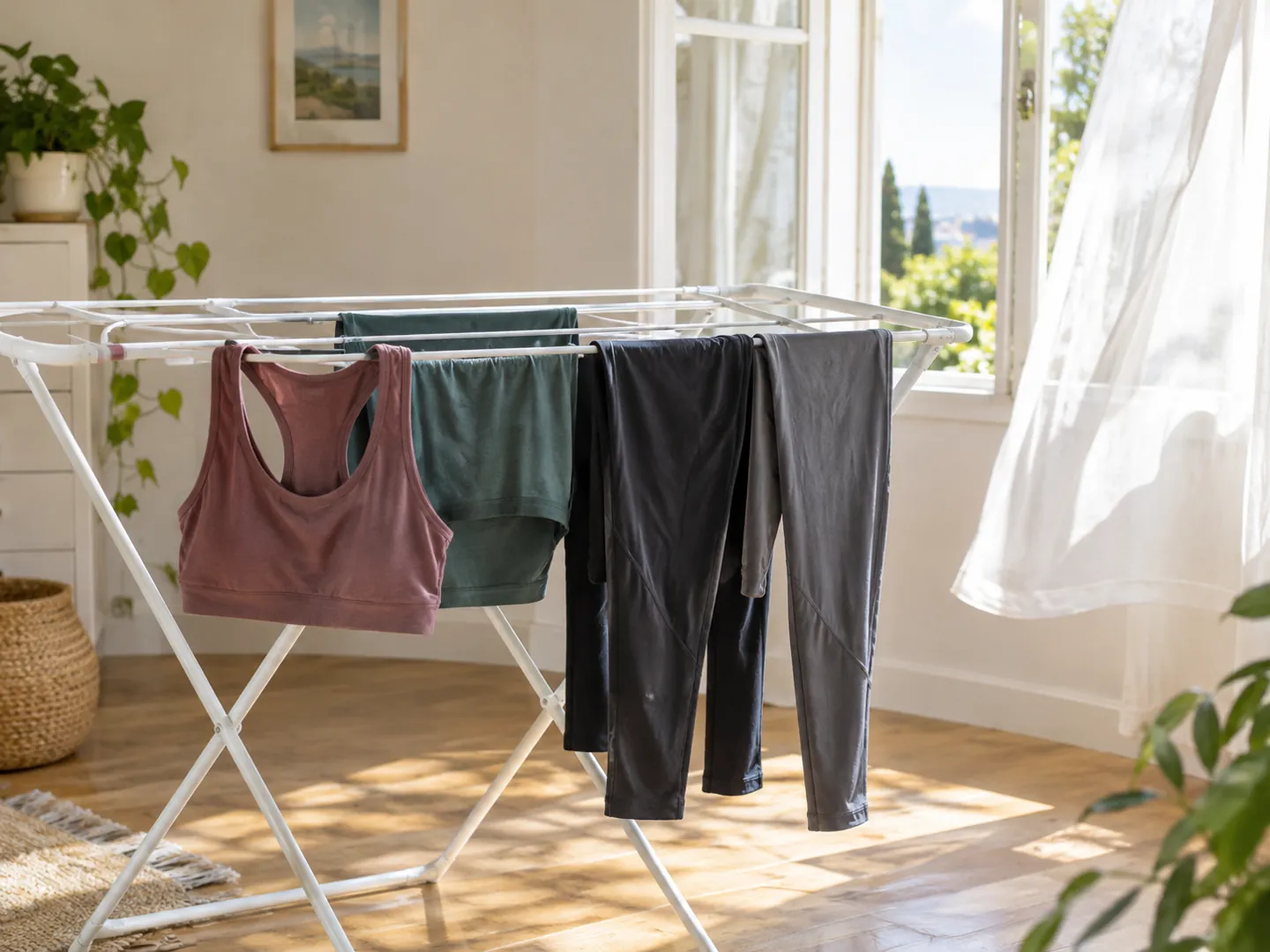
FOUR HABITS FROM THE RESEARCH
None of these needs special products. They follow from what the studies found about fibres, washing machines and drying.
Humid drying conditions were linked to characteristic malodours, so give kit air and space to dry.
Bacteria form biofilms on washing machine surfaces and can pass to clothes, so the machine is part of the story.
Polyester and nylon held on to odour more in the studies. A cotton or wool layer may smell less for low-key sessions.
Researchers note cooler washes and less bleach remove fewer microbes from clothes, so see what temperature your kit's label allows.
TWO NUMBERS WORTH KNOWING
One trial with real workouts,
one lab test across six fibres.
26 people
People who wore test shirts to a spinning class
Shirts were kept for 28 hours, then a trained odour panel scored them. Polyester smelled significantly less pleasant and more intense than cotton.
WORKOUT TRIAL · GHENT UNIVERSITY
6 fibres
Fibre types exposed to a synthetic sweat
Cotton, mercerised cotton and viscose gave off lower levels of ketones and aldehydes at 30 minutes than wool, nylon and polyester.
LAB TEST · OTAGO AND ALBERTA
A 2025 study found that washing reduced known odour compounds on synthetic T-shirts, yet the load of intact bacteria on the clothes went up, as skin bacteria were replaced by microbes from the washing machine.
A QUICK FABRIC CHECK
Pick a fibre to see what lab studies found about how it takes up and gives off sweat odours. The bar shows how strongly that fibre tended to hold odour in the research.
Based on Callewaert et al. (2014) and McQueen et al. (2024). Lab results on fibres and yarns; real garments, blends and finishes vary.
THE WASHING MACHINE EFFECT
Clothes go through cycles of wearing, washing and drying, picking up microbes from skin, the washing machine, water and laundry products along the way. Researchers describe laundry odour as a whole ecosystem rather than a single cause.
A 2025 study notes that cooler washes and less bleach are better for the environment but can make it harder to remove microbes from clothes. A 2024 review from Manchester Metropolitan University adds that biofilms inside the machine can foul both its surfaces and the clothes.
In conversation
In a study of 26 people after a spinning class, polyester shirts smelled significantly more intense and less pleasant than cotton. Different bacteria grew on each fabric: micrococci were found almost only on the synthetic shirts.
Both play a part. Sweat and bacteria transfer from the skin, and the Ghent researchers concluded that the fibre type steers which microbes grow and so what odour may develop.
Not necessarily. A 2025 study found washing reduced known odour compounds on synthetic T-shirts, but the number of intact bacteria rose, with washing machine microbes replacing skin bacteria.
One reason found in research is drying: humid, slow drying conditions were associated with characteristic malodours and favoured particular bacteria.
In one lab test, wool released more odour compounds than cotton at first, but like cotton and viscose it released lower amounts of ketones after 3 hours than nylon and polyester.
Each figure on this page comes from the sources below.
ABOUT THIS NAME
ocsportswear.com is part of the DoodleSale portfolio. It isn't in an auction right now, but you can ask about leasing it.